

Morehead State
Silicon Valley innovation still regularly grabs headlines, but there’s ingenuity happening in the foothills of Kentucky that’s turning heads lately. Tucked inside the Ronald G. Eaglin Space Science Center at Morehead State University, a dedicated team of scientists, engineers, and students is redefining what a small university contributes to U.S. defense and space technology.
Morehead’s reputation in small satellite (smallsat) development is globally renowned for good reason, even if many in the region haven’t yet heard about it. The university is one of the few academic institutions in the country capable of designing, building, and operating entire spacecraft systems in-house. Their achievements span from deep space missions to real-time lunar telemetry, and the workforce Morehead develops plays an invaluable role in the industries it seeds.
And now, thanks to a growing partnership with the Department of the Air Force through the WIN in Kentucky initiative, Morehead State’s capability and workforce are being recognized as a national asset.
A Unique Ecosystem for Defense Innovation
A small satellite is exactly what it sounds like: any satellite of sufficiently low mass and size, usually under 2,600 pounds. Smallsats are cheaper to launch into orbit and can be more useful than large satellites, especially for gathering information. However, they possess unique challenges related to power storage and propulsion, both of which require vital space and weight.
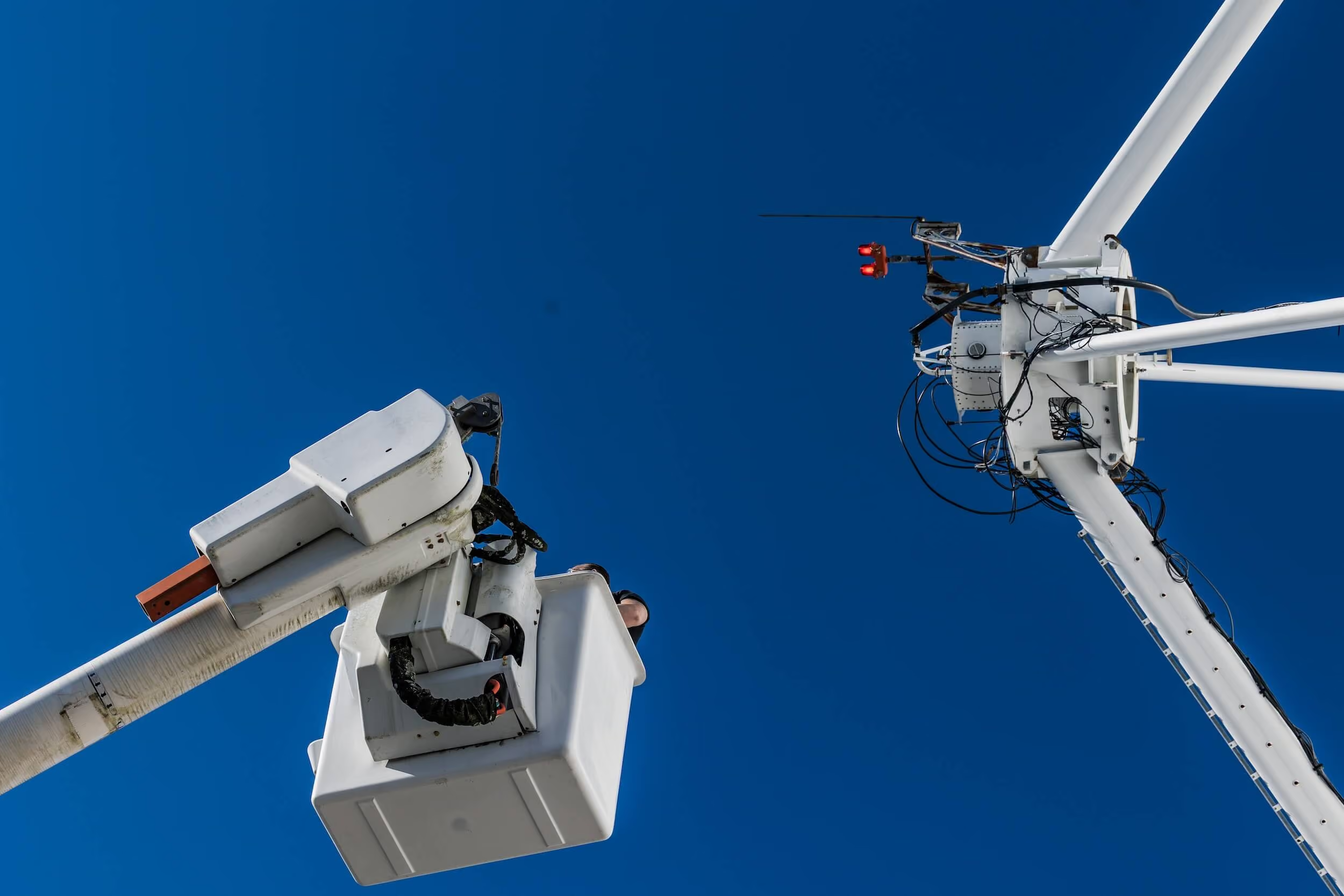
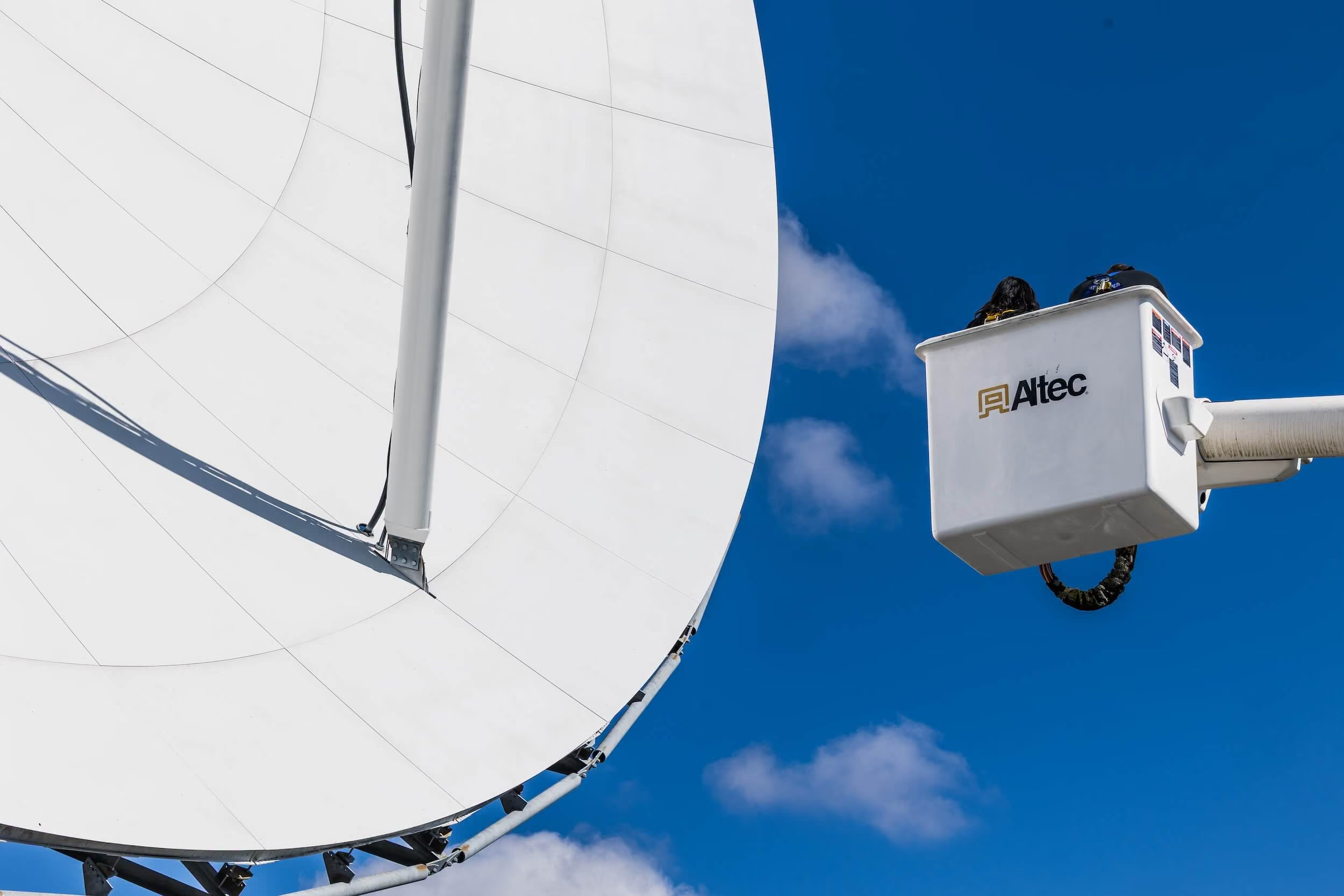
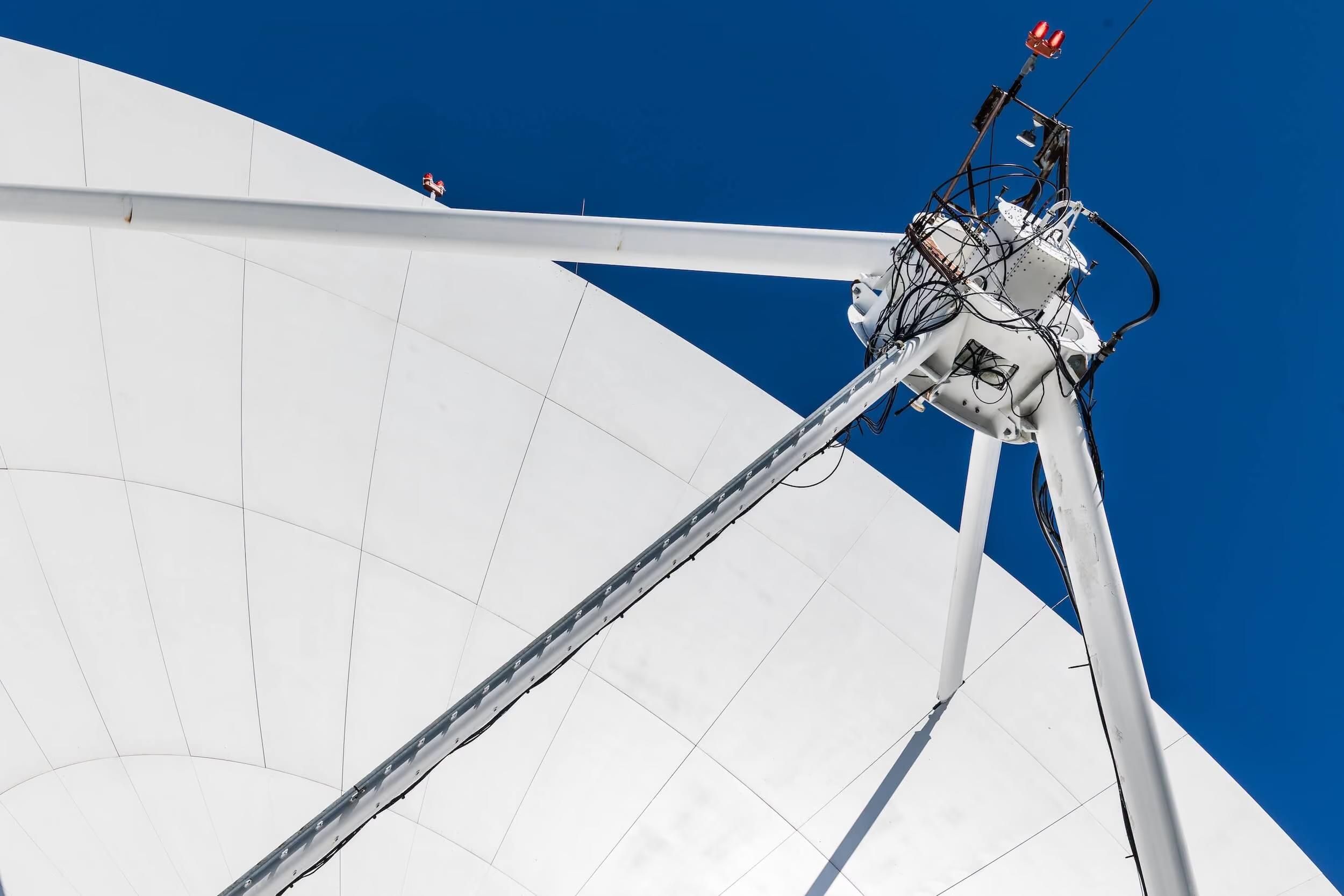
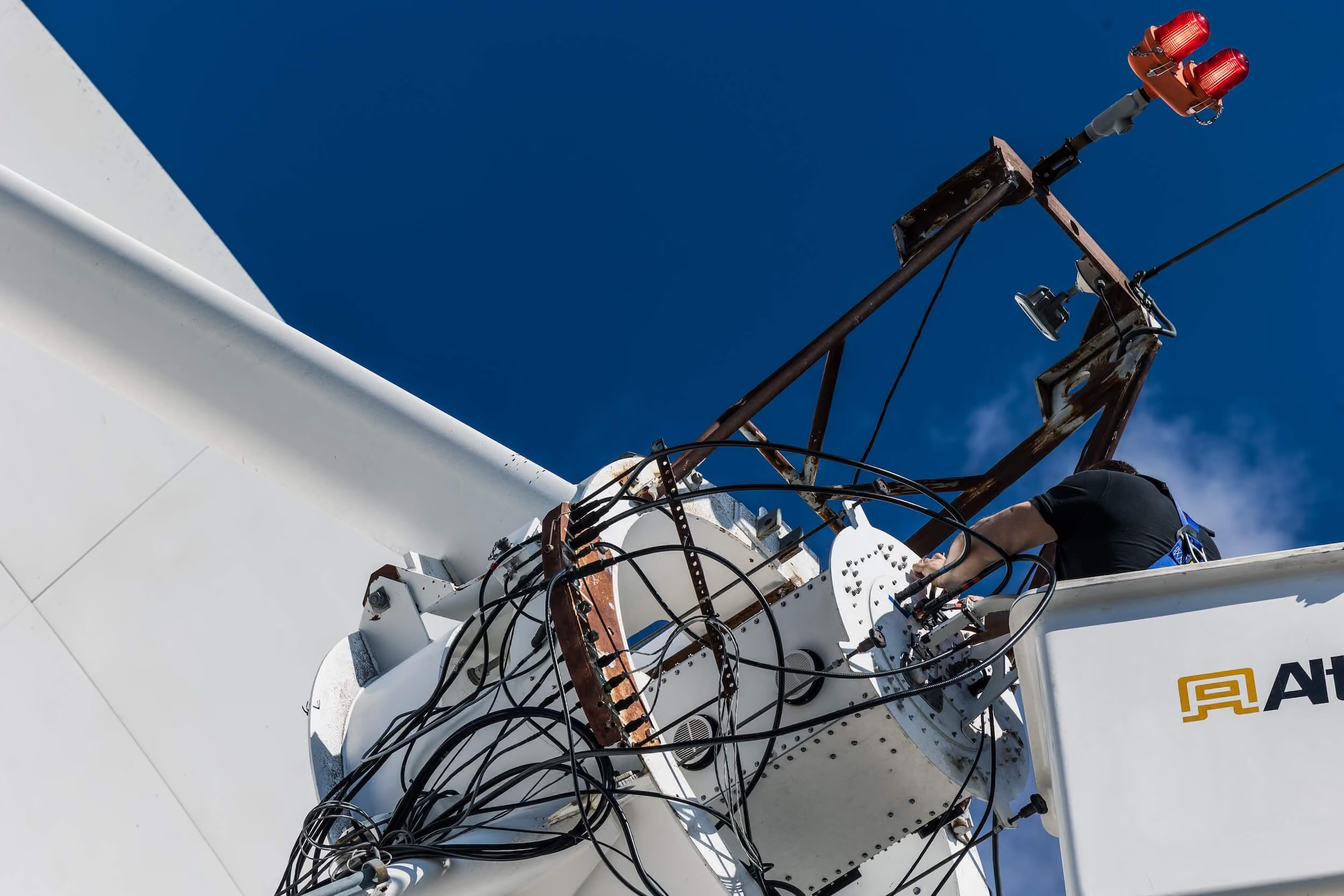
Morehead State’s Space Science Center conducts tracking, telemetry, and control services through its 21-meter satellite tracking system, with special attention paid to lunar smallsats.
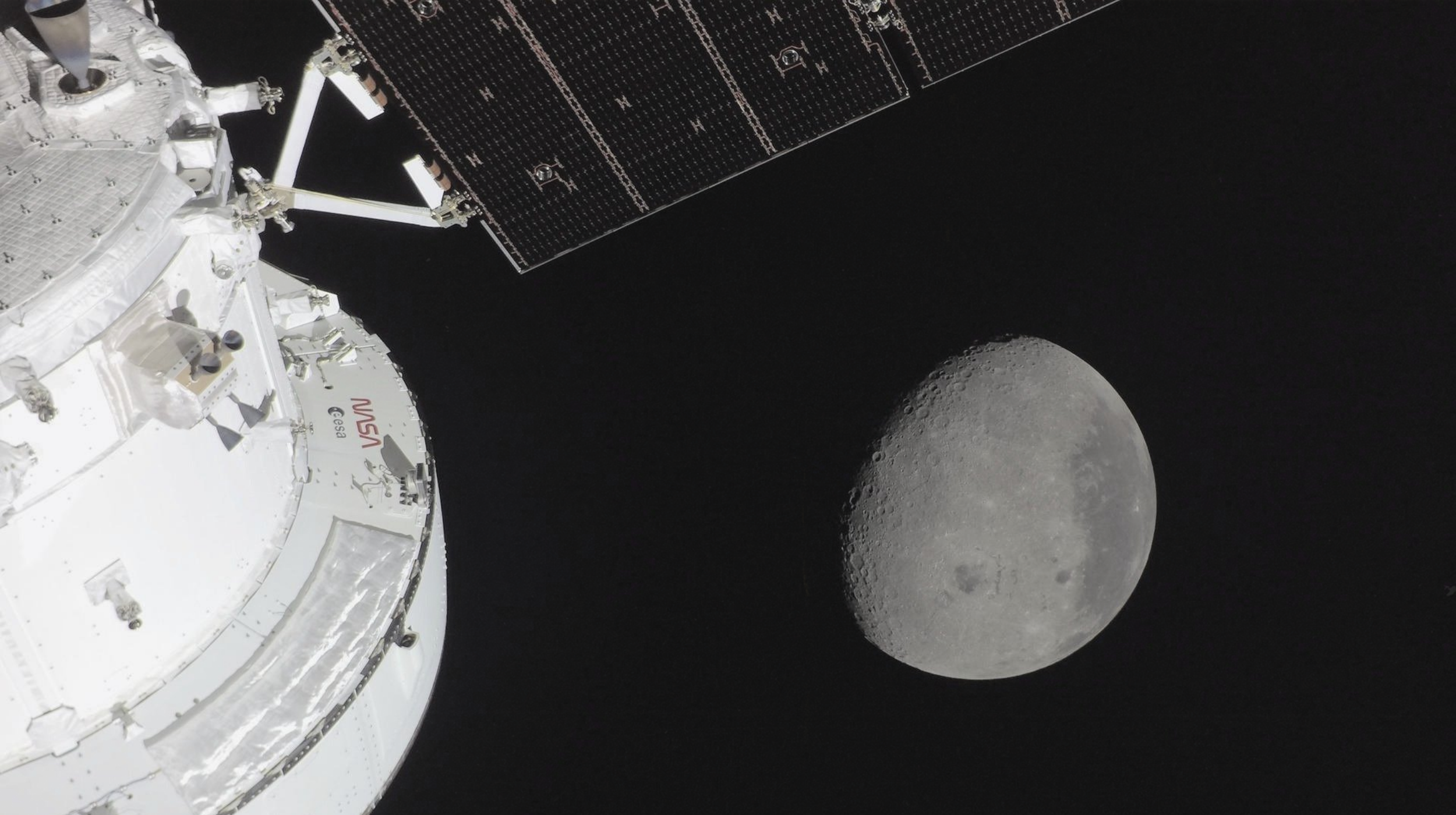
“We primarily focus on lunar technologies,” explains Dr. Ben Malphrus, Executive Director of the Space Science Center. “Lunar sounds like it's just exploration, but the Department of Defense and the intelligence community have a keen interest in lunar missions these days.”
That interest stems from lunar orbit offering a unique vantage point for Earth surveillance: “Lunar is the high ground. If you're at or around the moon, you can see the entire Earth,” adds Dr. Malphrus. “It's a strategic location for defense and intelligence.”
Morehead State enjoys a storied history of collaborating with space missions to the Moon, making it ideally suited for the team’s current efforts. Dr. Malphrus describes how, for at least part of any given lunar mission, “Every command to a U.S. spacecraft on the surface of the moon for the last 52 years went through our command center at Morehead State,” says Dr. Malphrus.
“Morehead State University has been a leader for a long time now,” affirms Scott Rotruck, Vertx Partners VP of External Relations. “What’s more is they’re one of the first programs for undergrads in space systems engineering.”
For Morehead, its history and program aren't just theoretical research – they’re operational defense infrastructure supported by a budding student workforce.
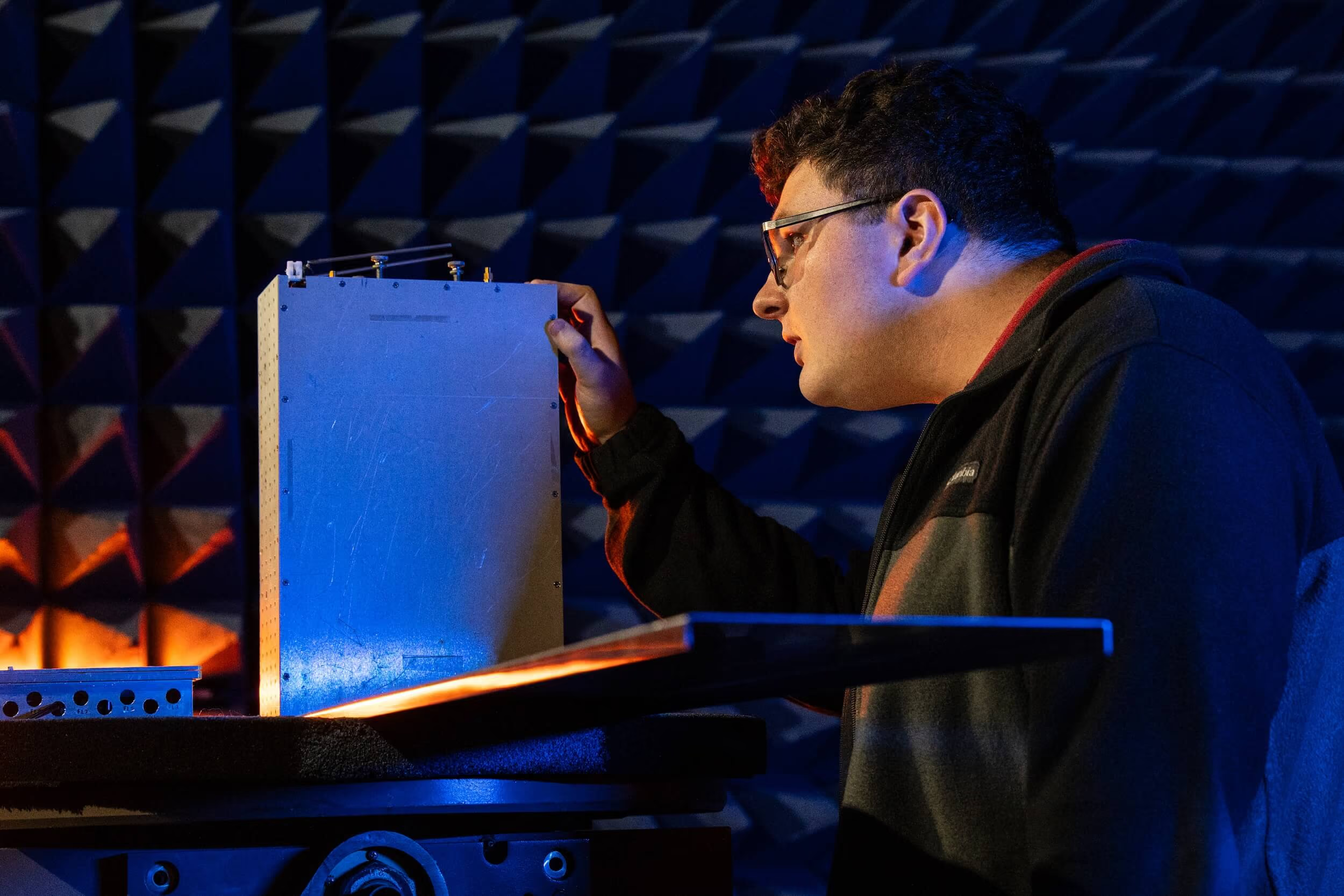
Dr. Malphrus and his team have created a rare environment where academic research, national security, and student workforce development intersect. Their 21-meter ground station antenna, one of the defining features of the Space Science Center, provides real-time command and control for various spacecraft – including several for NASA and commercial partners – while also giving students hands-on experience.
“We’ve benefited tremendously from SBIR and STTR programs over the years,” Malphrus explains. “And we involve students intimately in the research. They're not just watching from the sidelines; they're doing the work.”
WIN: Bridging Innovation and Impact
WIN in Kentucky’s role in Morehead State’s work is fostering this intersection of academic, public, and workforce development. As a Department of the Air Force program designed to strengthen academic engagement in science and technology, WIN acts as a launchpad for universities like Morehead to transform their innovations into real-world military applications. WIN’s goal is to unlock the talent and ingenuity of institutions outside the traditional defense corridors, of which Morehead is a prime example.
Through one of WIN’s regional connectors, Vertx Partners, Morehead has expanded its reach beyond Appalachia. “Vertx has helped us expand our network effectively,” says Dr. Malphrus. “I think of them as matchmakers, matching people who have technology with people who might have an application for it.”
“It starts with academia,” explains Scott Rotruck. “We connect them to other researchers and industries, and when they come together, they produce a winning aerospace engineering product.”
That matchmaking has already yielded significant dividends. “It was a strategic partnership that actually, through Vertx, allowed us to work with [a] company to get our foot in the door at the U.S. Space Command,” explains Dr. Malphrus. “Now we've applied to be a university partner with the Space Command.”
Through WIN’s outreach, Morehead State now has an opportunity that could dramatically scale its impact in national defense.
“You’ve got to find somebody in an agency somewhere with a problem your technology can solve,” says Dr. Elijah Jensen, Assistant Professor of Space Systems Engineering. “That’s where [WIN] comes in: they help make those connections happen.”
A Workforce Primed for Liftoff
Beyond the technology, the human story behind Morehead’s program is just as compelling. It also highlights how the partnership between WIN in Kentucky and the university prioritizes workforce development during a crucial moment.
“We marry academics with the ability to be in the clean room learning how things are actually made and produced,” says Dr. Jensen. “It makes you a better designer, and it makes you a better engineer.”
“The students are key players in the R&D,” adds Dr. Malphrus. “We probably have about a quarter of them on the payroll as undergraduate research assistants at any given time.”
Emily Walter, a faculty member and RF engineer, began at Morehead as a student. Today, she helps operate the 21-meter dish, sending commands to and receiving data from active spacecraft. “Anybody can become a great engineer. I started knowing nothing,” explains Walter. “Now I design circuits for some of the most sensitive systems on earth.”
“Kentucky has one of the best workforces in the country,” says KY Representative Hal Rogers. “Universities like Morehead are vital to feeding that workforce and ensuring they’re best prepared for professional life, especially in high-tech industries like aerospace.”
Workforce development and an active student body go hand-in-hand at the Space Science Center. Just as crucial to its mission, however, is the need to generate publicity, something Walter comments on:
“We’re internationally recognized because we work with all these different partners, but we are locally unknown,” she says. “We’re a hidden gem here in Appalachia.”
That narrative is echoed by Chloe Hart, a Morehead graduate and now Ground Station Operator. “You don’t have to be at MIT or Stanford – there’s incredible work being done at Morehead State University,” she says. “And we need to show students in Kentucky and Appalachia that they can do this too.”
Looking Forward
As the U.S. Air and Space Forces continue prioritizing innovation through programs like WIN in Kentucky, partnerships with universities like Morehead State become increasingly vital. “These universities provide cutting-edge research and operational capabilities by cultivating the next generation of engineers, scientists, and defense technologists,” says Parallax Advanced Research President Dennis Andersh. “Through WIN, Parallax will continue supporting this endeavor.”
Still, the need to showcase these innovations and their role in national defense remains necessary.
“We're in a unique position that we're internationally recognized for small satellite development, but nobody in the area really knows who we are or what we do,” says Dr. Malphrus. “We could benefit from having the story told, and that's a key thing I think that WIN could help with and is helping with.”
From the Appalachian foothills of eastern Kentucky, Morehead State’s smallsat program helps secure the “final frontier.” It’s also anchoring a new model of American aerospace excellence. Worth highlighting is how those goals are being powered by academic partnership, regional talent, and national security priorities, values that align precisely with WIN’s ongoing efforts.
“There’s a perfect trifecta of WIN principles going on at Morehead State,” says Andersh. “Kentucky has a lot to offer the country, and we’re intent on fully realizing that potential.”
About WIN
The Warfighting Integration Network (WIN) connects academic, small business, and government partners to accelerate defense innovation and technology transition.
Led by Parallax Advanced Research in collaboration with Vertx Partners, WIN is an executed program under the APEX (Academic Partnership Engagement Experiment) umbrella, delivering education, coaching, and connection services for nontraditional innovators nationwide.
WIN’s data-driven approach and community of professionals from both sides of the contracting world reduce barriers to entry for dual-use technologies, ensuring that national security challenges are met with the best of American ingenuity.
While WIN's deepest roots are in its partner states, our mission has no borders. We work with innovators across all 50 states because national security is a national effort, and the next critical technology could come from anywhere.
About Parallax Advanced Research
Parallax Advanced Research is a 501(c)(3) nonprofit that tackles global challenges through strategic research and innovation partnerships. With expertise in defense, space, and advanced technology, Parallax supports the entire innovation lifecycle from discovery to transition.
About Vertx Partners
Vertx Partners specializes in building unique networks and creating opportunities for non-traditional innovators. They connect companies to the Department of War by guiding them through acquisition pathways and successful technology transition, focusing on both technology and business readiness.